when
2026
2026
what
IB Math AA internal assessment
IB Math AA internal assessment
tools
Python · Minecraft
Python · Minecraft
team
solo
solo
my part
model · simulation · build
model · simulation · build
status
in progress
in progress
The question
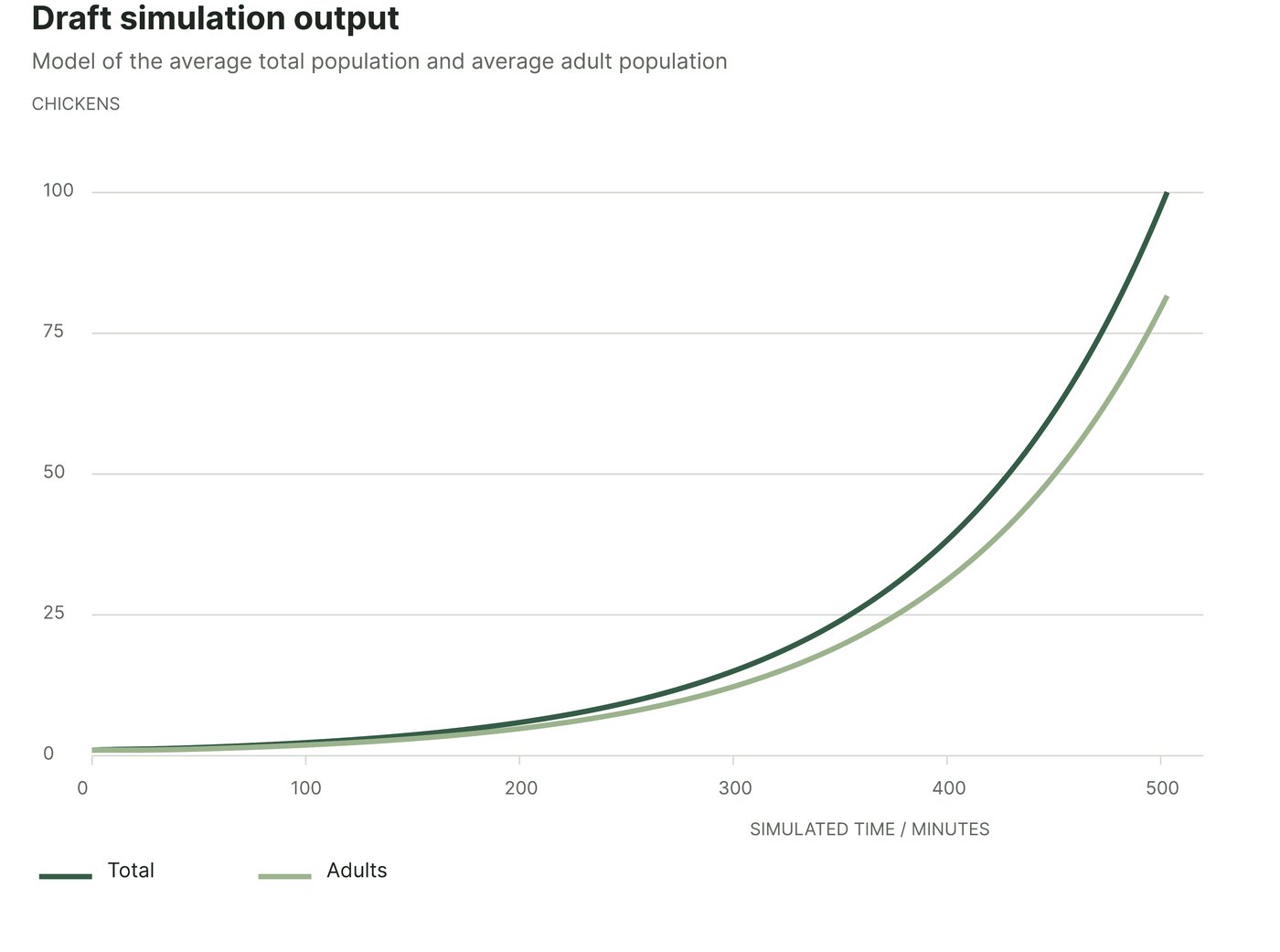
BandiMinecraft turns a familiar game mechanic into a population-growth problem. More adult chickens produce more eggs, but hatching is random and chicks need time to mature. So: start with one adult, throw every egg it lays, and keep going. How long until there are a hundred?
1 to 100
growth of a population through one adult
The rules that drive growth
5–10 min
Egg-laying interval. Adults lay eggs at random intervals; 7.5 minutes is used as the average.
1 in 8
Chance of hatching. A successful hatch usually creates one chick; rarely, it creates four.
20 min
Maturation delay. A chick cannot lay eggs until it becomes an adult.
no deaths
Model assumptions. Chicks mature naturally and every egg is thrown the moment it's laid.
Probability and population growth
BandiThe model combines the expected number of chicks from each egg with the time those chicks need to mature. Adults and babies are kept separate, because they play different roles in the growth.
BandiA successful hatch has a 1/32 chance of producing four chicks instead of one. Combining the outcomes:
E = (31 + 4) / 256 = 35/256 ≈ 0.137 chicks per egg
With one egg every 7.5 minutes, that's an expected 7/384 chicks per adult per minute.
E = (31 + 4) / 256 = 35/256 ≈ 0.137 chicks per egg
With one egg every 7.5 minutes, that's an expected 7/384 chicks per adult per minute.
BandiTwo groups are tracked. Adults lay eggs; babies join the adult population after 20 minutes. A short time step updates both groups until their combined population reaches 100.
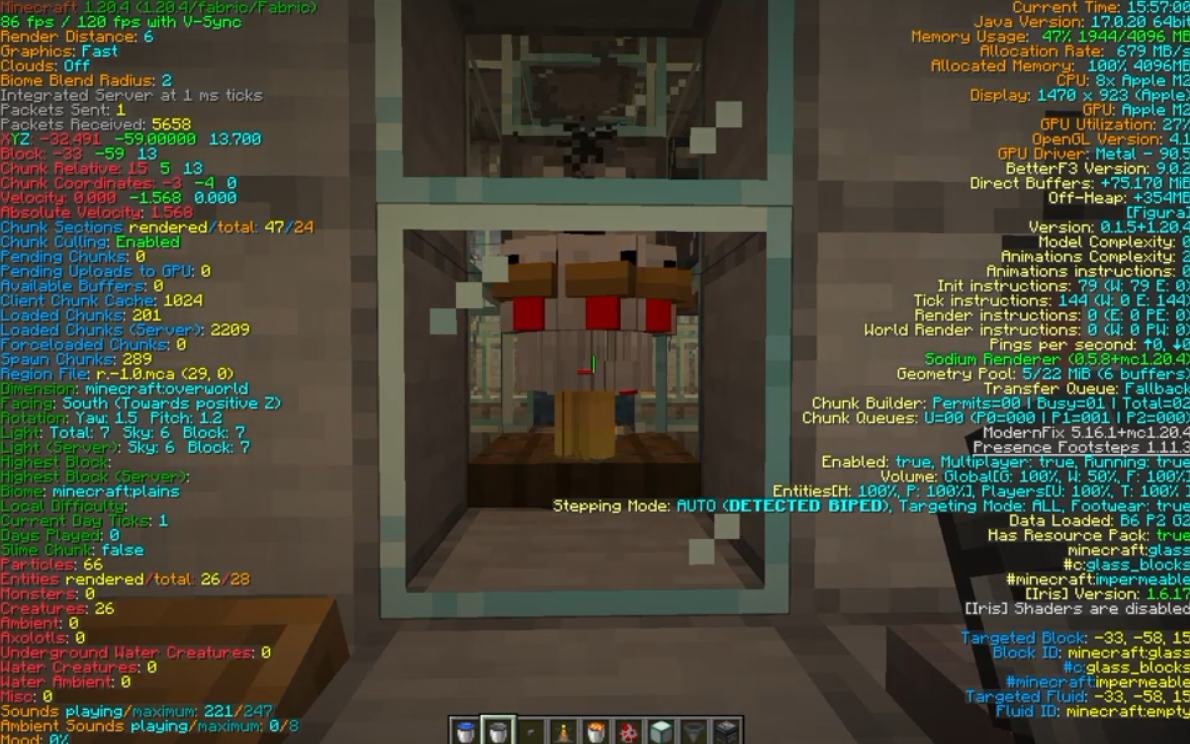
Testing the model in Minecraft
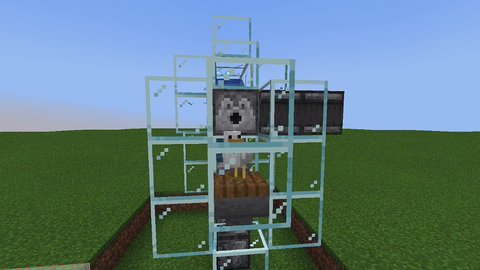
BandiAn automated setup collects and throws eggs continuously, so the flock grows without me. Faster game time makes repeated trials practical while keeping the same growth rules: /tick rate 1200 instead of the regular 20, so one real second is one game minute, sixty times faster.
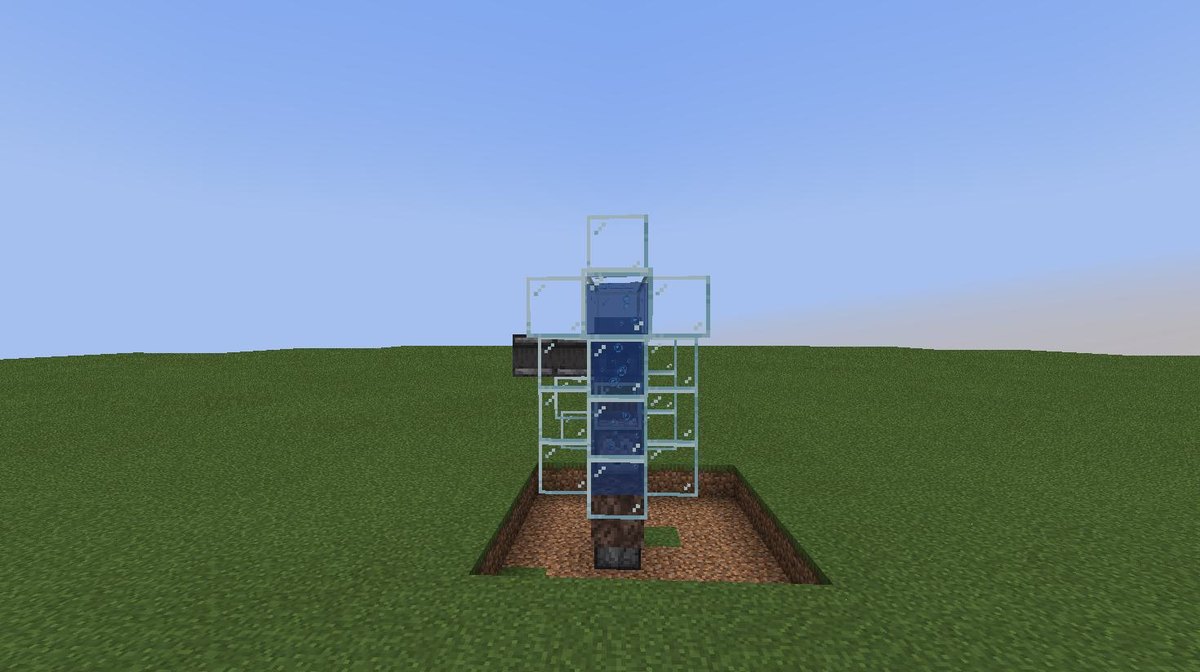
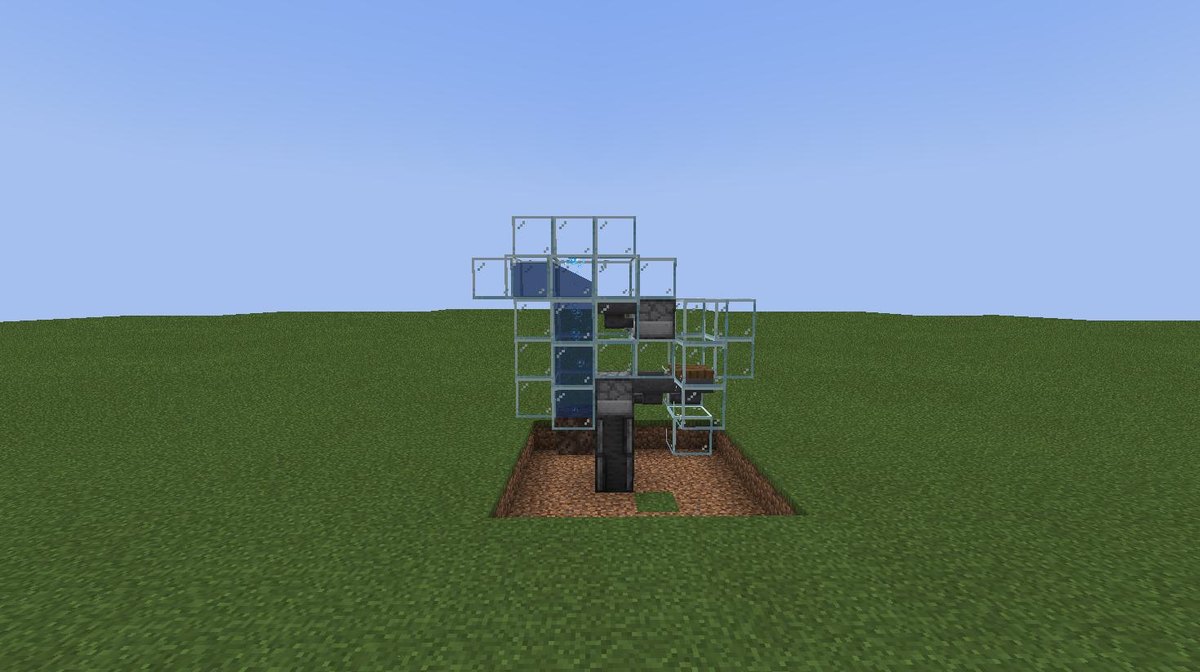
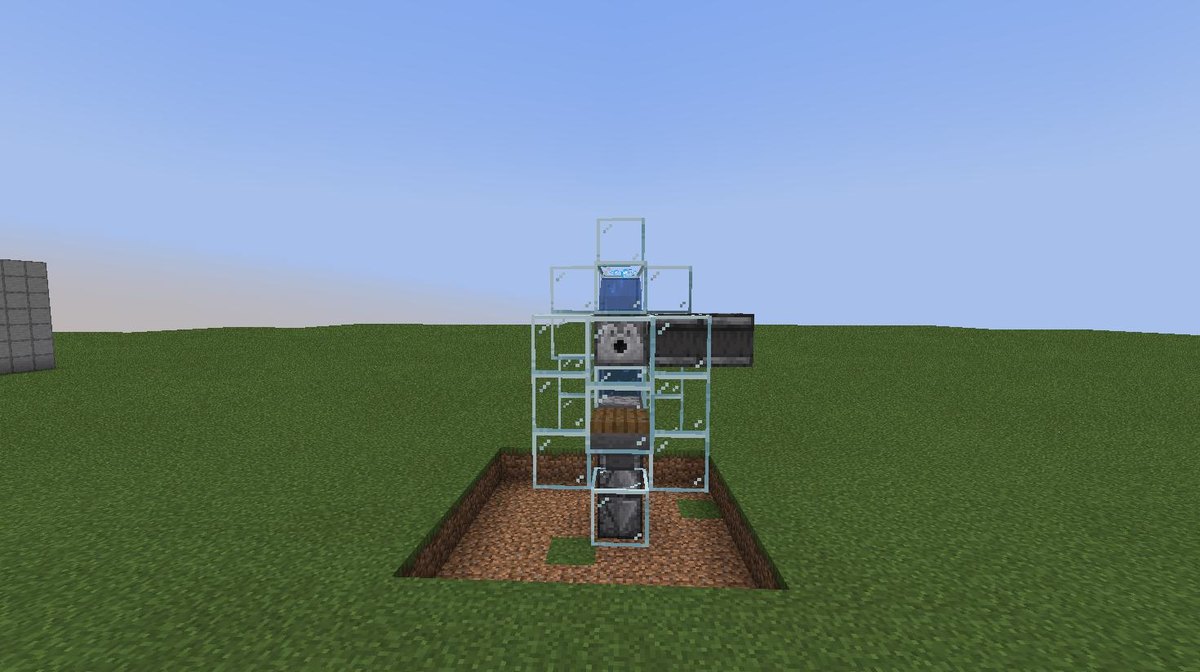
One trial, sped up
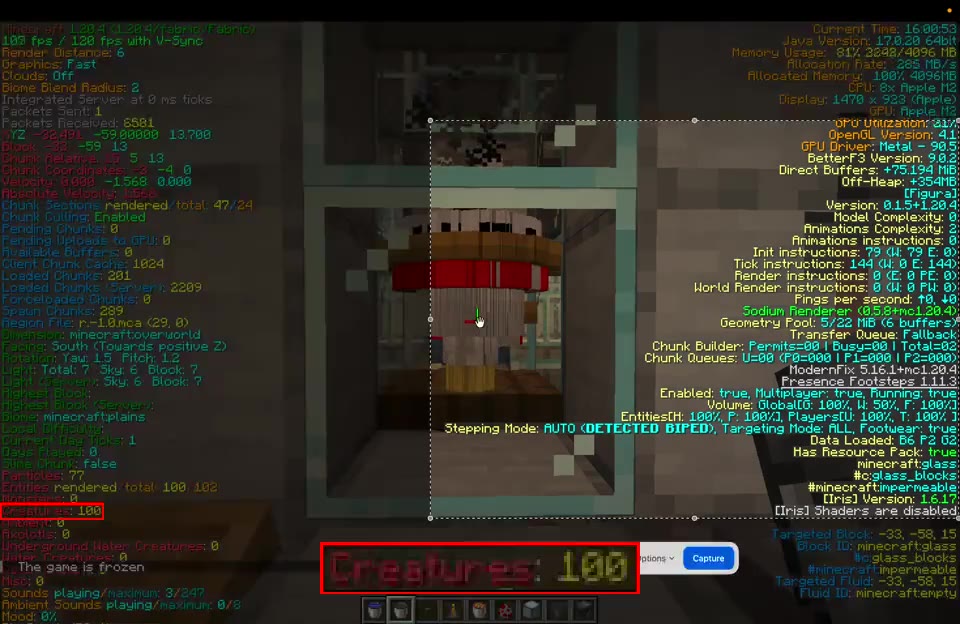
BandiA test run, recorded from inside the machine with the debug screen on so the numbers are visible. The clip is 15× faster than real time; the real run took about six minutes, which at tick rate 1200 is about 366 game minutes. Watch the Creatures counter on the left: it starts at 0 and the recording stops when it reaches 100.
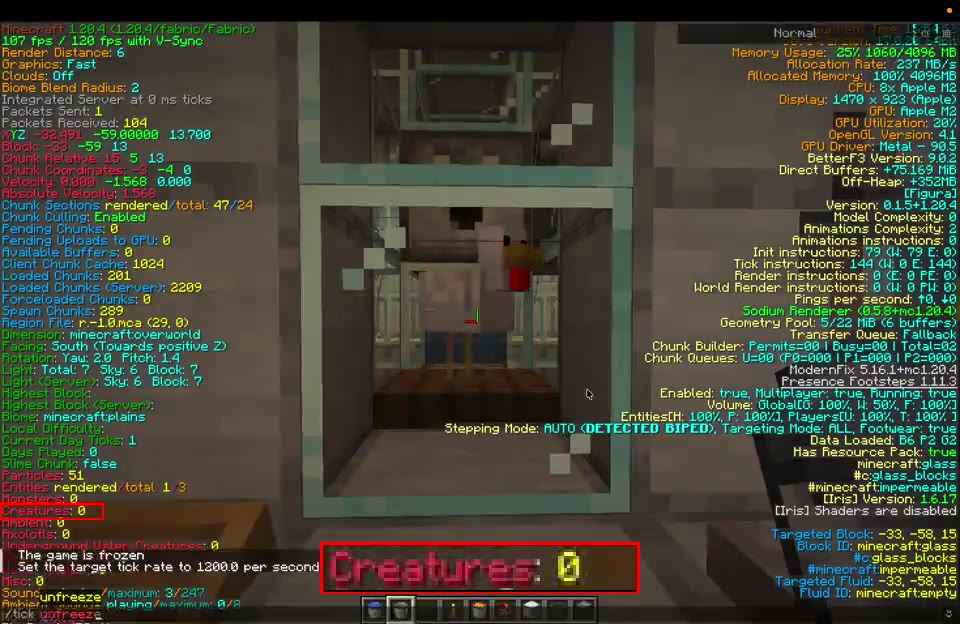
five planned trials
Reset to one adult chicken each time. Let the machine throw the eggs the adult lays until the total population reaches 100.
record the evidence
Record the population of chickens until it reaches 100. Convert accelerated time back to game minutes.
compare and refine
Compare the model with the trial mean and spread. Check for errors and analyse potential improvements.
Why it's here
BandiIt isn't a game I made. It's my maths coursework, and it's not finished yet. It's here because I got to pick the topic, and I picked a game. Minecraft's chickens follow rules that are published and fixed, which makes them a better population model than most things in real life, and an experiment that would take days on a farm runs in a few minutes of game time. The same habit as everywhere else on this site: find the rules, then play by them.